01
Auger holes
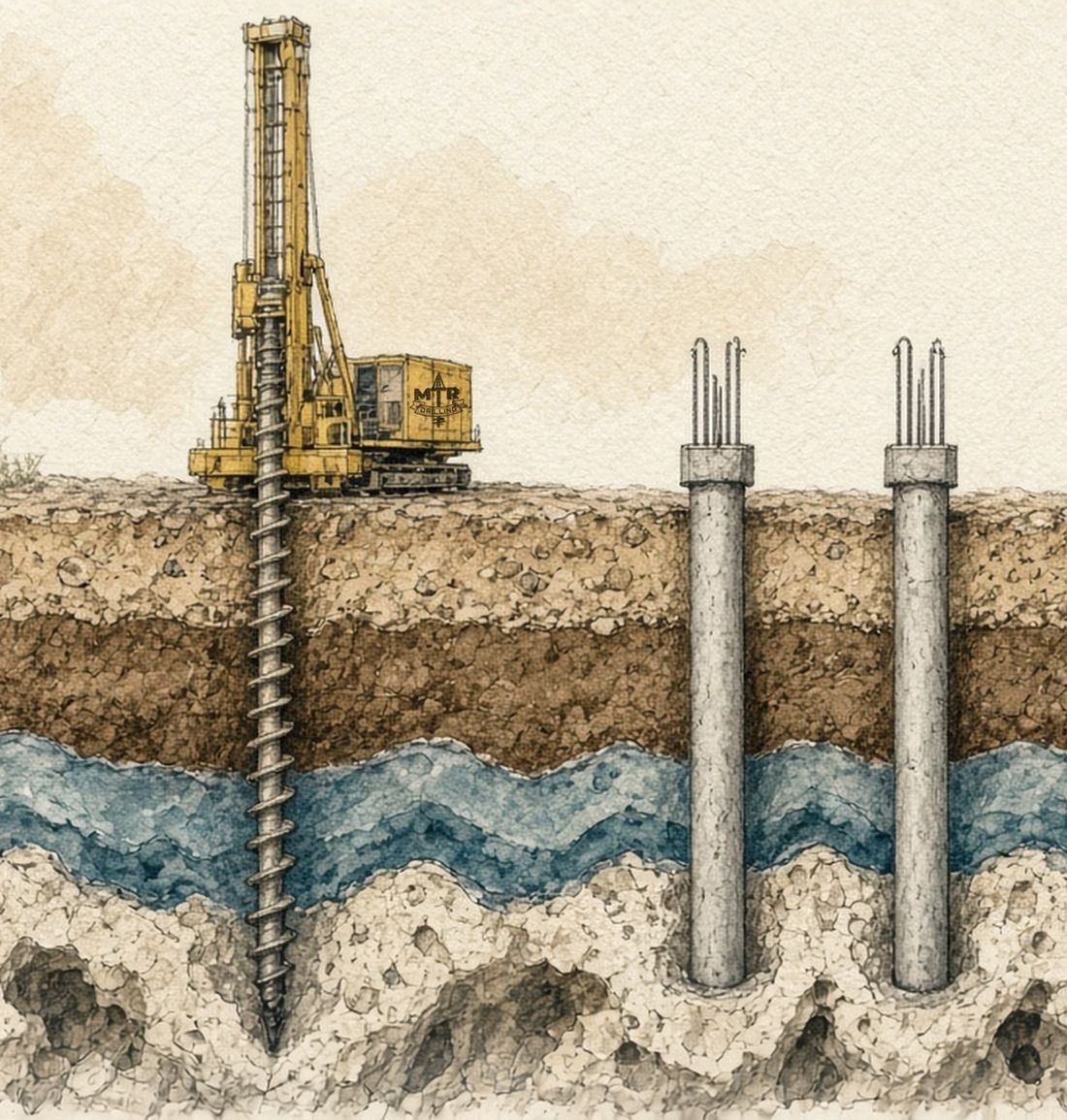
Open holes drilled with an auger to the diameter and depth on your plans, with the spoil brought up and out of the hole.
 Get a quote
305.910.7737
Certified General Contractor · CGC1539001
Auger holes, drilled shafts, auger cast piles and helical piles for contractors and builders. Based in Miami, licensed statewide in Florida.
Free quote · Reply within 24 hours · Licensed statewide (CGC1539001)
5 years in business Insured and certified
Services
Every job starts with the plans and the soil report. We drill what the engineer designed.
Open holes drilled with an auger to the diameter and depth on your plans, with the spoil brought up and out of the hole.
A larger-diameter bored hole. The steel cage is set, then concrete is placed to finish the shaft.
Grout is pumped through the hollow auger as it comes back up, so the pile forms on the way out. Then the steel goes in.
Steel shafts with helix plates are turned into the ground like a screw, ready to load.
Process · auger cast pile
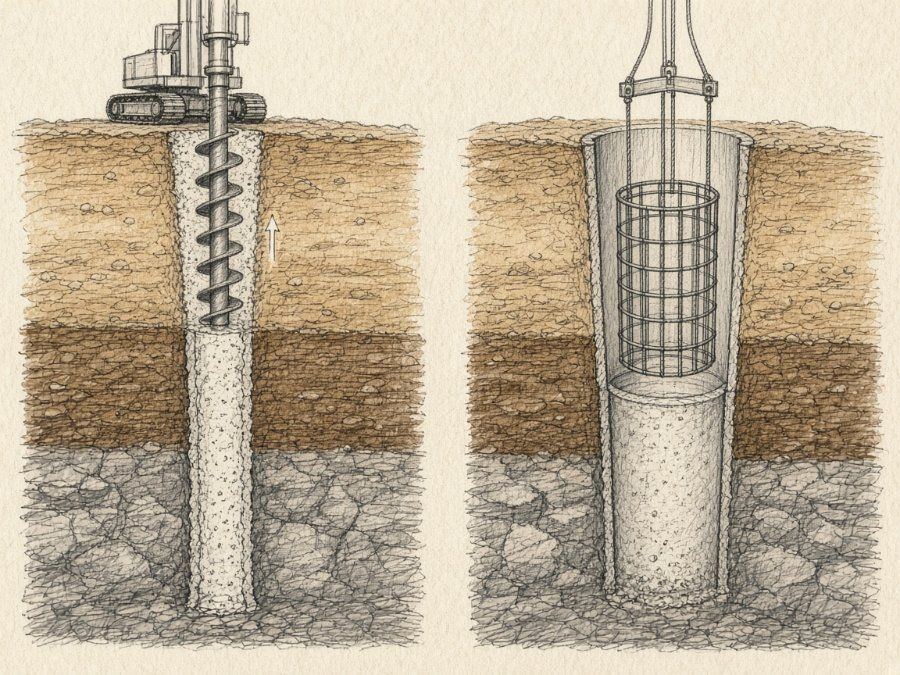
Drilled shafts go the other way round: the cage is set first, then the concrete is placed.
Work · real clips and photos from @mtrdrillinginc
Working with MTR
Foundation plans and the geotech report, or just call and tell us about the job.
We go through the pile schedule and site access and send you a price.
Rig and crew roll in, scheduled around your job.
Piles drilled to plan, spoil handled, site left ready for the next trade.
Field notes
Quote
Four quick steps. Watch the job get built while you fill it in.
An open hole is drilled with an auger to the diameter and depth on the plans. Spoil comes up the auger flights and out of the hole. Uses depend on the plans and may include footings, piers or post foundations. Hole stability depends on soil and groundwater. Your engineer of record decides the foundation design.
A larger-diameter hole is bored first, then a steel cage is set in the open hole. Concrete is then placed, typically from the bottom up, using a tremie when the hole contains water or slurry. Casing or drilling fluid may hold the hole open in soft or wet ground. Your engineer of record decides the foundation design.
A continuous hollow-stem auger is drilled to depth. Grout is pumped through the stem as the auger is withdrawn, so the hole never stands open. Steel is set last into the wet grout. Your engineer of record decides the foundation design.
Steel shafts with helix plates are turned into the ground with a hydraulic torque motor. Installation torque is monitored as a check against the design. The piles can be loaded right after installation, with no curing period. Your engineer of record decides the foundation design.
Field notes
General information, not engineering advice. Your engineer of record decides the foundation design.